一位使用者剛向我指出這個問題:
Misaje 語言(如同喀麥隆的大多數語言)在元音上帶有聲調符號(更精確地說是語法標記)。
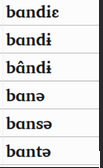
當您按「字」排序字表時,運作非常良好。它會忽略聲調標記來排序單字,當有多個單字字母相同時,會將它們垂直排列:
當您按「字尾」排序字表時,帶有標記的元音突然出現在非字母表字母(r, x)之下,並按照標記順序排列(先所有低聲調,然後所有高聲調,……):
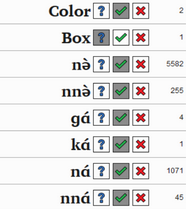
該語言使用分解式變音符號,因此如果考慮到變音符號,第二張截圖中的排序是完全合理的。不幸的是,「過濾字表時忽略變音符號」對排序沒有影響,僅對過濾有效。它似乎應該影響排序。
字母表的設定如下:
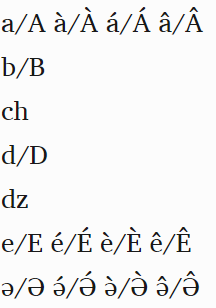
A user just alerted me to this:
The Misaje languages have (as most languages in Cameroon) tone marks on vowels (grammatical marks to be more precise).
When you sort the wordlist by word, this works very nicely. It sorts the words regardless of tone marking, and then when there are multiple words with the same letters it will put these below each other:
When you sort the wordlist by End or word, the vowels with markings suddenly appear even under the letters that are not part of the alphabet (r, x), in the order of markings (first all low tones, then all high tones, …):
The language uses decomposed diacritics, so the ordering in the second screenshot makes perfect sense if it is taking diacritics into account. Unfortunately, “Ignore diacritics when filtering wordlist” has no effect on sorting, only filtering. It seems like it should affect the sorting.
This is how the alphabet is configured:
機器翻譯自 English








