Похоже, я заговорил слишком рано. Всё выглядело нормально, но когда дело доходит до глоссирования, кажется, что интерлинеаризатор учитывает только морфологию корня, а не аффиксы. Так что, хотя аффиксы введены правильно, досадно, что они не появляются в предложениях глосс, только корень.
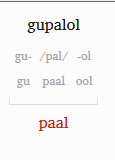
На скриншоте ниже слово «gupalol» в исходном языке правильно имеет морфологию gu- pal -ol. В целевом языке эти морфемы правильно помечены как gu- paal -ool. Несмотря на то, что я принял морфемы в целевом языке как правильные, строка глосс показывает только «paal», тогда как, по моему пониманию, она должна брать комбинацию морфем и давать правильный результат, а именно «gupaalool». Это происходит со всеми новыми словами, которые я пытаюсь разобрать. Я потратил много времени на поиск в файлах Paratext, но не могу понять, что, если что-то, нужно изменить, поэтому буду очень благодарен за помощь. Спасибо
It seems I spoke too soon. Everything looked ok, but when it comes to the glossing it appears the interlinearizer is only taking into account the morphology of the stem and not the affixes. So although the affixes are correctly entered, frustratingly, they do not appear in the gloss suggestions, only the stem.
In the screenshot below, the word “gupalol” in the source language correctly has the morphology gu- pal -ol. In the target language these morphemes are correctly marked as gu- paal -ool. Despite me having accepted the morphemes in the target language as being correct, the gloss line just shows “paal”, whereas my understanding is that it should take the combination of morphemes and provide the correct result, namely “gupaalool”. This is the case for all new words that I try to parse. I have spent a long time searching in the Paratext files, but cannot work out what if anything needs changed, so would greatly appreciate help. Thank you








