也許我可以在此提供一些資訊。
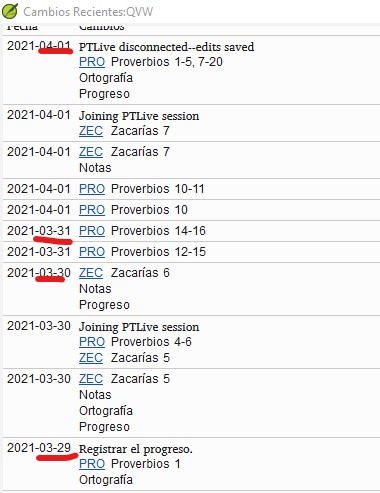
雖然您不會看到執行「傳送/接收」事件的歷史記錄,但您可以查閱文字或工具變更發生的日期。這似乎就是您需要的資訊。
例如,如果有人過了 5 天才執行一次「傳送/接收」,不幸的是,您將無法獲得他們在那 5 天內的工作資訊,但無論如何,當這次「傳送/接收」完成時,您將獲得所有變更及其在那 5 天內發生的日期。例如,如果第 1 天編輯了某節經文,或第 3 天修改了「詞彙清單」(Word List)等。
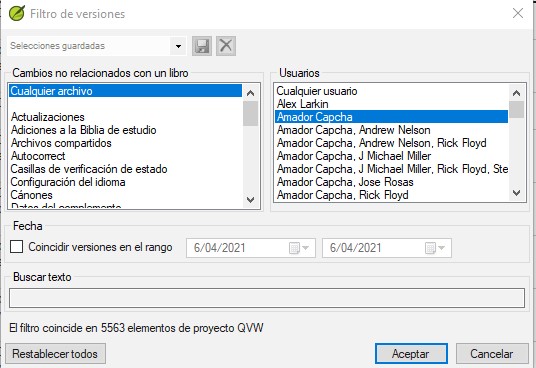
「歷史記錄」(History)也提供按使用者、日期和工具篩選的選項。
一般建議團隊在每個工作日的開始和結束時執行「傳送/接收」。如果他們可以存取網際網路,這將有助於保持資訊的最新狀態。但即使他們無法存取,經常透過 USB 隨身碟或 Chorus 執行「傳送/接收」也很有價值。
Maybe I can contribute here.
While you won’t get a history entry for the “make a send/receive” event, you can find out the day a change was made to the text or tools. Which seems to me to be the information you need.
For example, if someone doesn’t do an s/r until after 5 days, unfortunately you won’t have information on their work those 5 days, but anyway when this s/r is done, you will have all the changes and the dates they were made during those 5 days. If a verse was edited on day 1, or the Word List was modified on day 3, etc.
The History also offers you filtering options by user, date and tool.
In general, it is recommended that teams do an s/r at the beginning and end of each workday. If they have access to the Internet, this will allow you to keep the information up to date. But even if they don’t, constant s/r to a usb or with chorus are valuable.
機器翻譯自 English








