Talvez eu possa contribuir aqui.
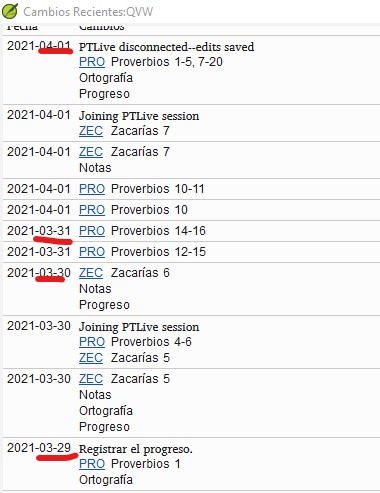
Embora você não obtenha uma entrada de histórico para o evento de “fazer um Send/Receive”, você pode descobrir o dia em que uma alteração foi feita no texto ou nas ferramentas. O que, para mim, parece ser a informação de que você precisa.
Por exemplo, se alguém não fizer um S/R até depois de 5 dias, infelizmente você não terá informações sobre o trabalho dessas 5 pessoas, mas, de qualquer forma, quando esse S/R for feito, você terá todas as alterações e as datas em que foram feitas durante esses 5 dias. Se um versículo foi editado no dia 1, ou a Lista de Palavras (Word List) foi modificada no dia 3, etc.
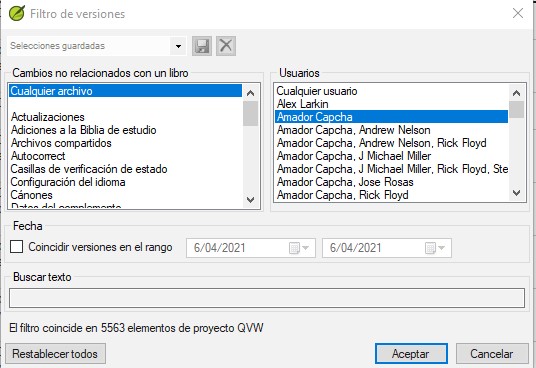
O Histórico também oferece opções de filtragem por usuário, data e ferramenta.
Em geral, recomenda-se que as equipes façam um S/R no início e no final de cada dia de trabalho. Se tiverem acesso à Internet, isso permitirá manter as informações atualizadas. Mas, mesmo que não tenham, um S/R constante para um pendrive USB ou com o Chorus é valioso.
Maybe I can contribute here.
While you won’t get a history entry for the “make a send/receive” event, you can find out the day a change was made to the text or tools. Which seems to me to be the information you need.
For example, if someone doesn’t do an s/r until after 5 days, unfortunately you won’t have information on their work those 5 days, but anyway when this s/r is done, you will have all the changes and the dates they were made during those 5 days. If a verse was edited on day 1, or the Word List was modified on day 3, etc.
The History also offers you filtering options by user, date and tool.
In general, it is recommended that teams do an s/r at the beginning and end of each workday. If they have access to the Internet, this will allow you to keep the information up to date. But even if they don’t, constant s/r to a usb or with chorus are valuable.