這似乎是一個常見問題! https://www.unicode.org/L2/L2017/17324-decimal-full-stop.pdf
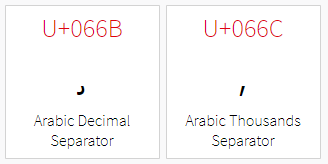
我的建議是在阿拉伯文文本專案中放置一個 changes.txt 規則,將句點/圓點更改為正確的阿拉伯千位分隔符 (\u066C),以便整個數字串和標點符號都使用相同的書寫系統且全部為 RTL(從右到左)。這樣應該就能按預期渲染。以下是一個應該能解決問題的規則:
"(\d)\.(\d\d\d)" > "\1\u066C\2"
這表示:找到任何由一個數字、一個句點和三個數字組成的序列,並替換為第一個匹配項(單個數字)、066C 分隔符,以及第二個匹配項(左側找到的三個數字)。
其他人可能能夠改進這個正則表達式,使其也能處理包含兩個分隔符的更長數字,例如:150.000.345。
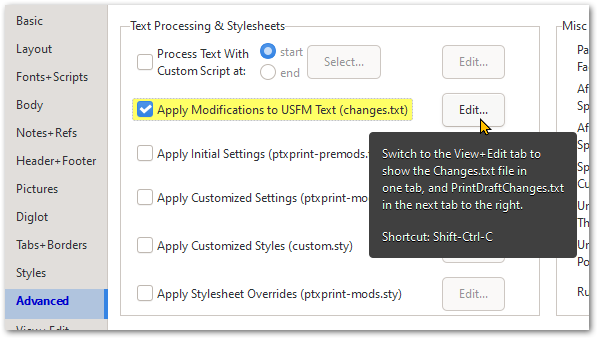
然後在出現的視窗中,貼上第 5 行顯示的上述規則。(注意:我註釋掉了對 PrintDraftChanges.txt 的引用,因為那可能不需要):
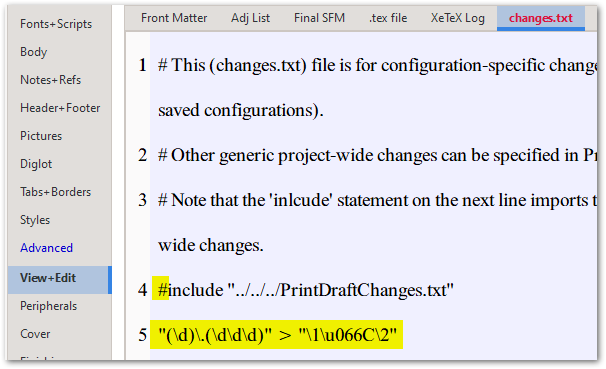
請告訴我們結果如何...
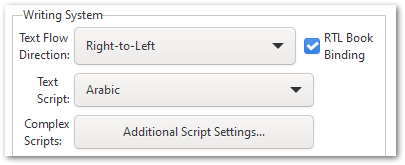
請確保您的 Fonts+Scripts 設定已設為 RTL 和阿拉伯文:
This seems to be a common problem! https://www.unicode.org/L2/L2017/17324-decimal-full-stop.pdf
My suggestion would be to place a changes.txt rule in the Arabic text project to change the dot/period to the proper Arabic Thousands Separator (\u066C) so that the entire string of digits an the punctuation are all the same script and all RTL. It should then render as expected. Here's a rule that should do the trick:
"(\d)\.(\d\d\d)" > "\1\u066C\2"
This says, find any digit followed by a period followed by 3 digits, and replace with the 1st match (the single digit) followed by the 066C separator followed by the 2nd match (the 3 digits found on the left side).
Someone else might be able to improve this Regex to also work with much longer numbers where there are 2 separators: 150.000.345.
Then in the window that appears, paste in the above rule shown on line 5. (Note that I commented out the reference to PrintDraftChanges.txt as that's probably not needed):
Let us know how it goes...
Make sure you have also got the Fonts+Scripts settings set to do RTL and Arabic:
機器翻譯自 English








