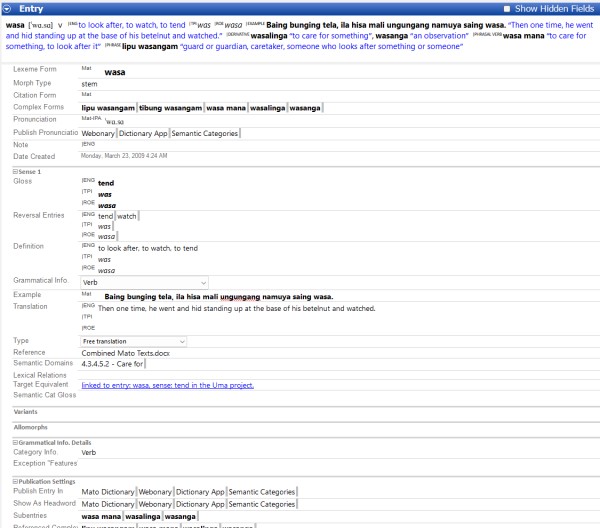
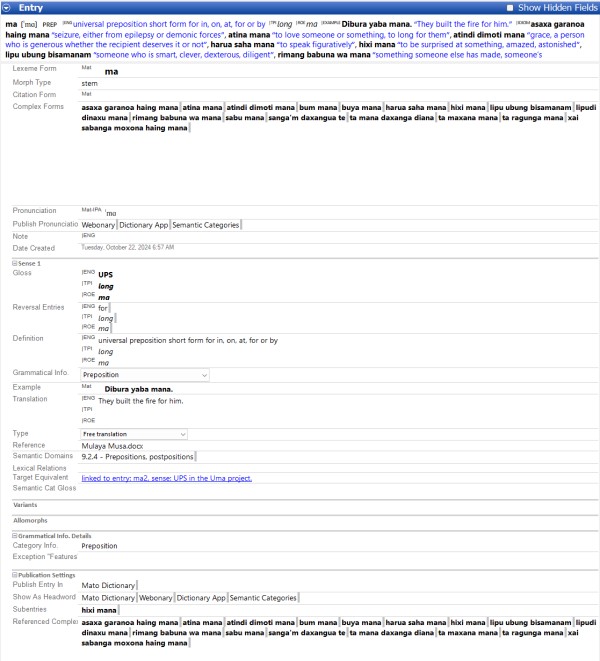
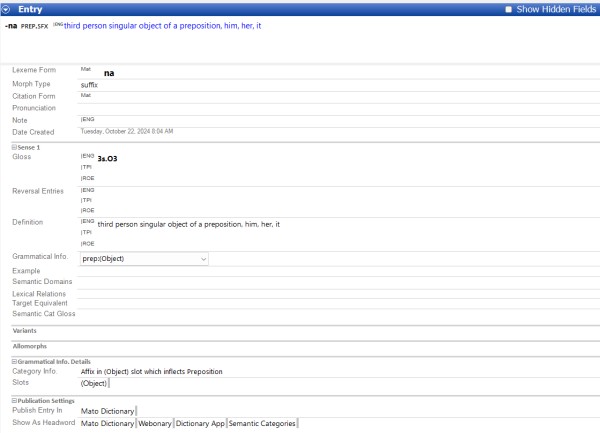
在源語言中,我有一個動詞片語 wasa mana ,意思是「照顧/照料」。這本質上是一個動詞「看」和一個通用介詞「在/對/關於/藉著/與...」,它可能帶有賓語,也可能不帶。在我的源語言詞典中,我有一個 wasa (動詞)「看/照顧」的條目,一個 ma (介詞縮寫)「UPS」的條目,以及 -na(以及其他介詞賓語的條目)「3s.O3」,還有一個 wasa mana(名詞短語)「他/她/它照顧他/她/它」的條目,該條目也被定義為一個動詞片語(PHRASAL VERB):
但是,當我分析文本時,我通常是逐個單詞進行分析的,如下面路加福音 20:28 的例子所示:
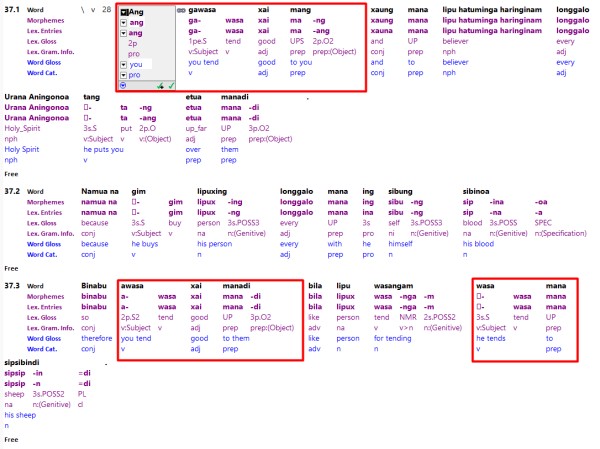
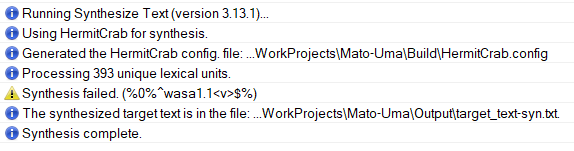
在前兩個例子中,wasa 和 ma 之間有一個插入詞。這些在起草模組(drafting module)中都能正常轉換。但在第三個實例中,wasa 無法合成(synthesize),而 mana 卻能正常合成。這是怎麼回事?

In the source language, I have a phrasal verb wasa mana 'tend to/care for'. This is essentially a verb 'watch' and a universal preposition 'in/on/at/for/with/by...' which may or may not have an object. In my source lexicon, I have an entry for wasa (verb) 'watch/tend', ma (prep short form) 'UPS', -na (& entries for other prepositional objects) '3s.O3', and also for wasa mana (noun phrase) 'he/she/it tends to him/her/it', which is also defined as a PHRASAL VERB:
But, often when I am parsing the text, I am parsing each word, as in the following example from Luke 20:28:
In the first two examples, there is an intervening word between wasa and ma. These transfer fine in the drafting module. But in the third instance, the wasa fails to synthesize, while the mana sythesizes just fine. What is going on here?
機器翻譯自 English








