處理動詞到動詞短語的翻譯,最好的方法是什麼?在 Mato(源語言)中,我們有 harungia (意為「反對說」),它在 Uma(目標語言)中被譯為 pasila suki mana(意為「說 滑動 關於」)。源語言動詞 可以同時帶主語和賓語。目標語言的動詞短語需要一個主語前綴(加在短語中第一個詞,即動詞上),但不能容忍賓語後綴:da-harungia-di(意為「3p.S-反對說-3p.O / 他們反對說他們」) > di-pasila suki mana(意為「3p.S-說 滑動 關於」)。我可以用規則去除賓語。但要合成目標詞,我需要在目標詞典中執行以下步驟:1. 定義動詞短語的模板,2. 用主語前綴填充主語槽位,然後 3. 重新定義動詞短語的釋義為類似 3p.S2 的形式,這將導致我必須回到編寫規則以處理所有替代釋義(3p.S>3p.S2 等) 以便在目標數據庫中進行合成。正是在第 3 步變得非常繁瑣,我想知道是否有更簡單的解決方案?
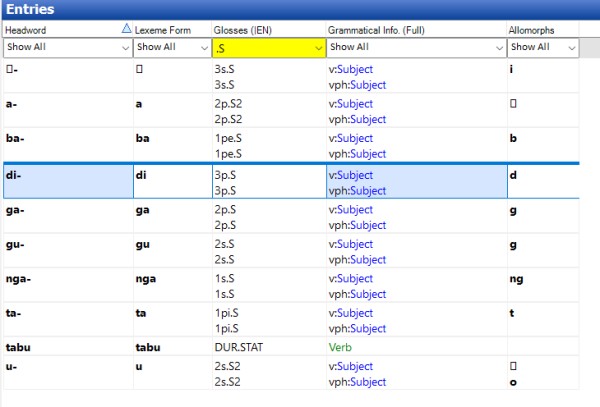
What's the best way to handle verb to verb phrase translations? In Mato (source lg) we have harungia 'speak against' which is rendered as pasila suki mana 'speak slip about' in Uma (target lg). The source verb can take both a subject and an object. The target language verb phrase requires a subject prefix (on the verb which is the first word in the phrase), but will not tolerate an object suffix: da-harungia-di '3p.S-speak against-3p.O / they speak them against' > di-pasila suki mana '3p.S-speak slip about'. I can strip the object with a rule. But to synthesize the target word means that I need to do the following in the target lexicon: 1. Define a template for verb phrases, 2. Populate the subject slot with the subject prefixes, then 3. Redefine the glosses for the verb phrase glosses to something like 3p.S2, which would then send me back to writing a rule to handle all the alternate glosses (3p.S>3p.S2, etc) for synthesizing within the target database. It was at point 3 that this became really cumbersome, and I'm wondering if there's an easier solution?
機器翻譯自 English








