你好。
我也認為,在 Paratext 中我們擁有的最實用的方法是建立 anon848905 提到的模板,如果你需要將註釋放在同一個文本中。操作註釋檔案可能會帶來比好處更多的問題。
我只想補充一點:我們也有選項將註釋放在「詞彙表」(WordList)中。在這種情況下,註釋不會顯示在文本中,因為它不適用於特定的經節,而是添加了一個問題詞彙,這使得可以觀察到該註釋,適用於該詞彙出現的所有經節。
例如,在下圖中,關於詞彙 “chaynullami” 的註釋將指向 272 個經節(右側的紅色圓圈),根據我的篩選,該詞彙出現在這些經節中:
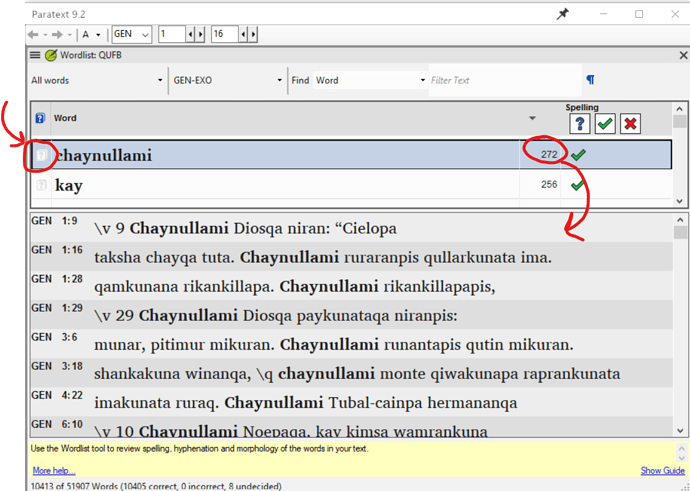
image1126×802 252 KB
當我們在「詞彙表」中建立註釋時,該註釋(左側的紅色圓圈)會標記為藍色,以警告存在註釋(就像文本中的紅色旗標一樣)。
此選項也適用於「聖經術語」。
問候,
anon689242.
Hola.
I also consider that the most practical thing we have in Paratext is to create the template that anon848905 mentions, if what you need is to put the notes in the same text. And manipulating the notes file can bring more problems than benefits.
I just want to add that: we also have options to put notes in the WordList. In this case the note does not appear in the text because it does not apply to a specific verse, but a word in question is added and this makes possible the observation of that note to all the verses where this word is present.
As an example, in the following image, a note on the word “chaynullami” will refer to the 272 verses (the red circle on the right) where this word is present according to my filter:
image1126×802 252 KB
When we create a note in the WordList, the note (the red circle on the left) is marked in blue, to warn that there is a note (like the red flags in the text).
This option is also available for Biblical Terms.
Saludos,
anon689242.
機器翻譯自 Español