I thank @Mark P and @mhosken for their detailed answers. It has happened to me before, that I had overlooked an existing feature in PTXprint, as a new user. So I wanted to be sure, before I arrange our need for a bleed manually. I will now follow their advice and will manually do the math and will solve the need with extra margins and with personal notes in my files.
So this question can be marked as "solved" if this feature is available on this forum.
For the record: I was asking for bleed as a noun, not as a verb. @mhosken has asked back "what are you needing to bleed?" And for this case, the answer is "nothing visible". It is a requisite of the print-shops that we provide in our PDF an area of extra 3 mm all around our "final page size". When I use Scribus there is a feature, and they are calling that area "bleed" in the English-language-GUI.
To be complete: In German, there are several technical terms for the area that is available to design elements like background-photos, or background-color-areas beyond the final page-size; with the intend to cut off this area during production and have a clean result without any white showing.
I looked it up: The terms used are "Beschnittzugabe", "Beschnittrand", "Beschnitt" or "Anschnitt". When I feed these terms into DeepL Pro, it gives me "Bleed allowance", "Bleed margin", "Bleed", "Printed edge" and the capitalization is not mine. We would need a technical dictionary for printing and design and publishing to make sure that we talking internationally without misunderstandings. I do not have one available, sorry.
And I also looked up the issue of "printers tend to want crop marks" versus my statement of "I know that ... do not want crop marks". We are both right: The printers in Europe do not want the crop marks from their customers. They do their own impagination, depending on many parameters and only then do they add crop marks if and as needed. If you want to read an entire page about this subject, here is a link; you can certainly auto-translate it:
An information page about registration marks
The pertinent information is this sentence (they are using "registration marks" as a generic term, including the actual registration-marks, crop marks, as well as folding-marks and color-samples):
At WIRmachenDRUCK, however, you don’t have to do anything in this regard, as we automatically add the necessary registration marks to your print files before printing.
And there was a follow-up question about thin paper (< 50 g/m²). [Have you ever noticed that you cannot see any of the previous answers, when you answer a question in this forum? Not very helpful.] We have never needed such paper, so I did not know. But I went and had a look for you:
The way printing works in Europa, for the low-budget customers like our project, is that features and extras are not global, but get displayed on the web-interface "as per product". So since our print-shop is offering some 400+ product groups and some 60000 possible variations, I cannot easily look that up in general.
If we filter this to "small books, with hard cover and 4/4 color in CMYK and 80 pages content" then the thinnest paper they are offering is 90 g/m². If you look at their machines, and if you remember that they produce some 25000 orders per day, you might see why special delicate paper is not so suited to their business and target-customers.
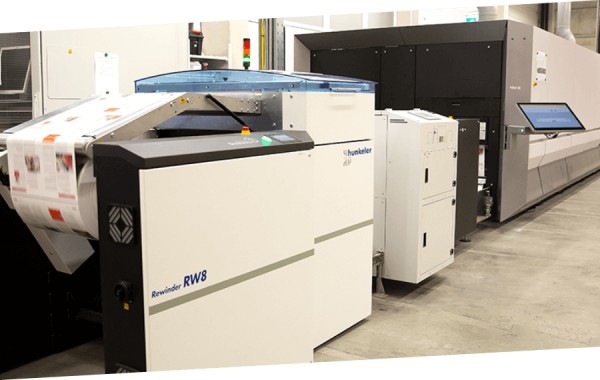
The way I have understood PTXprint so far (there is a nice video about the benefits) is that it enables projects to produce their own paper-versions of projects at several stages. For (community)testing, for encouragement, for niche-audiences for portions. Seems that the users of PTXprint are not mainly professional typesetters whose job it is to prepare entire Bible-editons for commercial print-runs. Correct me, if I got that wrong. If you prepare a portion with less than 500 pages, for example "The story of David" or "The Psalms" there is no need to pay extra for thin paper, and to have a rather delicate book with special paper, unless you want to train an audience to handle such paper.
I was glad that on this forum there was mention of a special company (I believe in the Netherlands) who specialize in Bible production and thin paper; but that is far from our present need and from my question about how to handle bleed in PTXprint.
I had to smile about the wisdom of "In the commerical world, money tends to help encourage priorities." Very true. We are not playing in that league. "In the Bible world, money tends to be limited." I had shared that whatever we want or do, the print-companies in our price-range will not change their workflow for our requests or needs. The do have reasonable customer service. For example if you need extra quick delivery or if they made a mistake, or if the customer made a mistake, you can typically reach a real human being and find a solution that is win-win. But we can never change any technical aspects beyond their offered product-range, even if we wanted to pay double. We would need to find a classic small-print-shop, and those are less easy to contact intercontinentally, I guess; not sure how they operate their customer-interaction these days.
Hope that some of this exchange is useful to other users. It goes beyond the handling of PTXprint. Still there is "print" in the name of the tool, and I guess that not all output is done on local laser printers. Greetings.








