我感谢 @Mark P 和 @mhosken 他们的详细回答。作为新用户,我以前也曾忽略过 PTXprint 中已有的功能。所以,在我手动安排我们的出血(bleed)需求之前,我想先确认一下。现在我将听从他们的建议,手动进行计算,并通过增加边距和在我的文件中添加个人备注来解决这个需求。
如果这个论坛支持此功能,那么这个问题可以标记为“已解决”。
为了记录:我询问的是作为名词的“出血”(bleed),而不是动词。@mhosken 反问“你需要对什么进行出血处理?”对于这个情况,答案是“没有可见内容”。这是印刷厂的要求,我们需要在 PDF 中提供围绕“最终页面尺寸”四周各 3 毫米的额外区域。当我使用 Scribus 时,有一个功能,他们在英文界面中将那个区域称为“bleed”。
为了完整起见:在德语中,有几个技术术语用于描述超出最终页面尺寸、可供背景照片或背景色块等设计元素使用的区域;其意图是在生产过程中裁掉该区域,从而获得干净的结果,不露出任何白边。
我查了一下:使用的术语是“Beschnittzugabe”、“Beschnittrand”、“Beschnitt”或“Anschnitt”。 当我将这些术语输入 DeepL Pro 时,它给出的是“Bleed allowance”、“Bleed margin”、“Bleed”、“Printed edge”,且大小写并非我所加。我们需要一本关于印刷、设计和出版的术语词典,以确保我们在国际交流中不会误解。我手头没有这样一本词典,抱歉。
我还查了一下关于“印刷厂通常想要裁切标记”与我的陈述“我知道……不想要裁切标记”的问题。我们双方都是对的:欧洲的印刷厂不想要客户提供裁切标记。他们根据自己的排版,取决于许多参数,然后仅在需要时添加裁切标记。如果你想阅读关于此主题的一整页内容,这里有一个链接;你当然可以自动翻译它:
关于套准标记的信息页面
相关信息是这句话(他们将“registration marks”用作通用术语,包括实际的套准标记、裁切标记,以及折页标记和色样):
然而,在 WIRmachenDRUCK,你在这方面不需要做任何事情,因为我们在印刷前会自动为你的印刷文件添加必要的套准标记。
还有一个关于薄纸(< 50 g/m²)的后续问题。[你有没有注意到,在这个论坛回答一个问题时,你看不到之前的任何回答?这不太有帮助。] 我们从未需要过这样的纸张,所以我不清楚。但我为你去看了看:
在欧洲,对于像我们项目这样的低预算客户,印刷的工作方式是,功能和额外选项不是全局的,而是在 Web 界面上“按产品”显示。因此,由于我们的印刷厂提供 400 多个产品组和大约 60000 种可能的变体,我无法轻易地普遍查询这一点。
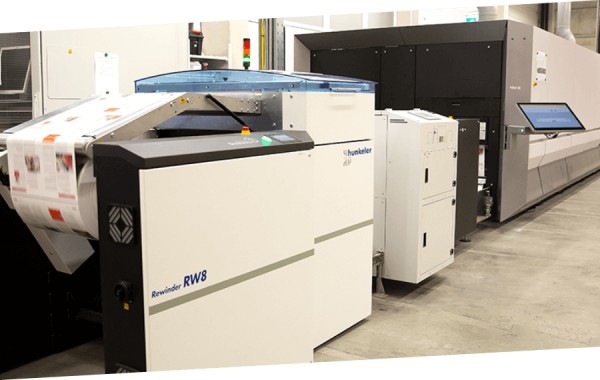
如果我们将其筛选为“小书,精装,CMYK 四色印刷,80 页内容”,那么他们提供的最薄纸张是 90 g/m²。如果你看看他们的机器,并且记得他们每天生产大约 25000 个订单,你可能会明白为什么特殊的精细纸张不适合他们的业务和目标客户。
据我目前对 PTXprint 的理解(有一个关于其优点的视频),它使项目能够在多个阶段自行制作项目的纸质版本。用于(社区)测试、用于鼓励、用于面向特定受众的片段。似乎 PTXprint 的用户主要不是那些工作是为商业印刷准备整本《圣经》排版的职业排版人员。如果我理解错了,请纠正我。如果你准备一个少于 500 页的片段,例如“大卫的故事”或“诗篇”,就没有必要为薄纸支付额外费用,也没有必要制作一本使用特殊纸张的精致书籍,除非你想训练读者处理这种纸张。
我很高兴在这个论坛上提到了一个专门从事《圣经》制作和薄纸的特殊公司(我相信在荷兰);但这离我们目前的需求以及我关于如何在 PTXprint 中处理出血的问题还很远。
我对“在商业世界中,金钱往往有助于鼓励优先事项”这一智慧会心一笑。非常正确。我们不在那个级别。“在《圣经》世界中,金钱往往有限。”我曾分享过,无论我们想要或做什么,我们价格范围内的印刷公司都不会为我们的请求或需求改变他们的工作流程。他们确实有合理的客户服务。例如,如果你需要加急交付,或者他们犯了错误,或者客户犯了错误,你通常可以联系到真实的人并找到双赢的解决方案。但我们永远无法改变其提供产品范围之外的任何技术方面,即使我们愿意支付双倍费用。我们需要找到一家传统的小型印刷厂,我想跨洲联系它们不太容易;不确定他们现在如何运营客户互动。
希望这次交流的部分内容对其他用户有用。这超出了 PTXprint 的操作范围。不过,该工具的名称中仍有“print”(印刷),我想并非所有输出都是在本地激光打印机上完成的。问候。
I thank @Mark P and @mhosken for their detailed answers. It has happened to me before, that I had overlooked an existing feature in PTXprint, as a new user. So I wanted to be sure, before I arrange our need for a bleed manually. I will now follow their advice and will manually do the math and will solve the need with extra margins and with personal notes in my files.
So this question can be marked as "solved" if this feature is available on this forum.
For the record: I was asking for bleed as a noun, not as a verb. @mhosken has asked back "what are you needing to bleed?" And for this case, the answer is "nothing visible". It is a requisite of the print-shops that we provide in our PDF an area of extra 3 mm all around our "final page size". When I use Scribus there is a feature, and they are calling that area "bleed" in the English-language-GUI.
To be complete: In German, there are several technical terms for the area that is available to design elements like background-photos, or background-color-areas beyond the final page-size; with the intend to cut off this area during production and have a clean result without any white showing.
I looked it up: The terms used are "Beschnittzugabe", "Beschnittrand", "Beschnitt" or "Anschnitt". When I feed these terms into DeepL Pro, it gives me "Bleed allowance", "Bleed margin", "Bleed", "Printed edge" and the capitalization is not mine. We would need a technical dictionary for printing and design and publishing to make sure that we talking internationally without misunderstandings. I do not have one available, sorry.
And I also looked up the issue of "printers tend to want crop marks" versus my statement of "I know that ... do not want crop marks". We are both right: The printers in Europe do not want the crop marks from their customers. They do their own impagination, depending on many parameters and only then do they add crop marks if and as needed. If you want to read an entire page about this subject, here is a link; you can certainly auto-translate it:
An information page about registration marks
The pertinent information is this sentence (they are using "registration marks" as a generic term, including the actual registration-marks, crop marks, as well as folding-marks and color-samples):
At WIRmachenDRUCK, however, you don’t have to do anything in this regard, as we automatically add the necessary registration marks to your print files before printing.
And there was a follow-up question about thin paper (< 50 g/m²). [Have you ever noticed that you cannot see any of the previous answers, when you answer a question in this forum? Not very helpful.] We have never needed such paper, so I did not know. But I went and had a look for you:
The way printing works in Europa, for the low-budget customers like our project, is that features and extras are not global, but get displayed on the web-interface "as per product". So since our print-shop is offering some 400+ product groups and some 60000 possible variations, I cannot easily look that up in general.
If we filter this to "small books, with hard cover and 4/4 color in CMYK and 80 pages content" then the thinnest paper they are offering is 90 g/m². If you look at their machines, and if you remember that they produce some 25000 orders per day, you might see why special delicate paper is not so suited to their business and target-customers.
The way I have understood PTXprint so far (there is a nice video about the benefits) is that it enables projects to produce their own paper-versions of projects at several stages. For (community)testing, for encouragement, for niche-audiences for portions. Seems that the users of PTXprint are not mainly professional typesetters whose job it is to prepare entire Bible-editons for commercial print-runs. Correct me, if I got that wrong. If you prepare a portion with less than 500 pages, for example "The story of David" or "The Psalms" there is no need to pay extra for thin paper, and to have a rather delicate book with special paper, unless you want to train an audience to handle such paper.
I was glad that on this forum there was mention of a special company (I believe in the Netherlands) who specialize in Bible production and thin paper; but that is far from our present need and from my question about how to handle bleed in PTXprint.
I had to smile about the wisdom of "In the commerical world, money tends to help encourage priorities." Very true. We are not playing in that league. "In the Bible world, money tends to be limited." I had shared that whatever we want or do, the print-companies in our price-range will not change their workflow for our requests or needs. The do have reasonable customer service. For example if you need extra quick delivery or if they made a mistake, or if the customer made a mistake, you can typically reach a real human being and find a solution that is win-win. But we can never change any technical aspects beyond their offered product-range, even if we wanted to pay double. We would need to find a classic small-print-shop, and those are less easy to contact intercontinentally, I guess; not sure how they operate their customer-interaction these days.
Hope that some of this exchange is useful to other users. It goes beyond the handling of PTXprint. Still there is "print" in the name of the tool, and I guess that not all output is done on local laser printers. Greetings.