Mato में, समय वाक्यांश दो थोड़े अलग-अलग तरीकों से हो सकता है। शब्द "समय" पहले आता है। एक विशेष नाम (proper noun) के साथ, यह बस वह संज्ञा होती है। लेकिन किसी भी अन्य संज्ञा को एक सहयोगी प्रत्यय (associative suffix) होना चाहिए। लक्ष्य भाषा Uma में, यह वाक्यांश हमेशा संज्ञा को पहले रखता है और समय के शब्द na पर एक स्वामित्व प्रत्यय (possessive suffix) होता है। Mato:
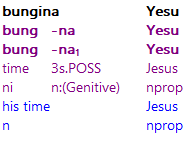
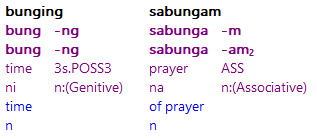
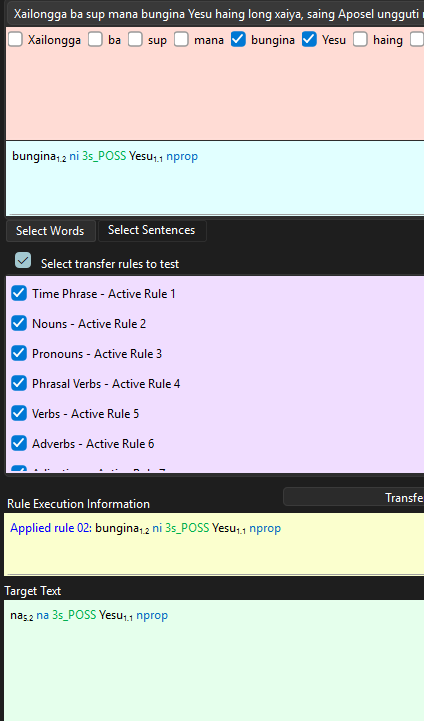
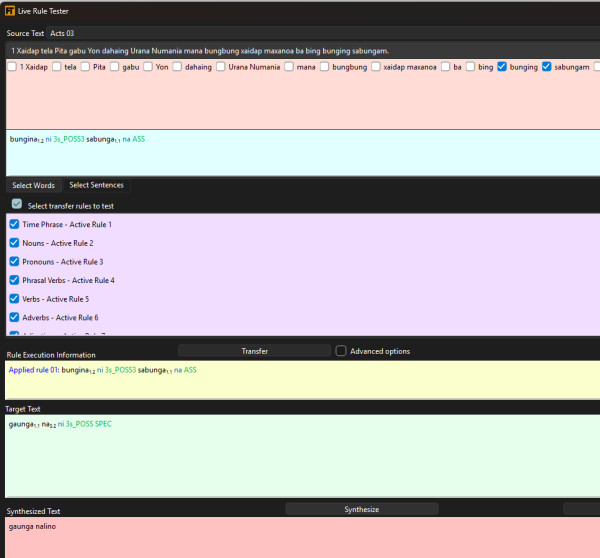
मेरे पास विशेष नाम के लिए एक नियम काम कर रहा था जिसमें मैंने पैटर्न c_ni, c_nprop के रूप में निर्दिष्ट किया था। मैं दूसरे प्रकार के समय वाक्यांश को पकड़ना चाहता था, इसलिए मैंने बस पैटर्न c_ni, c_n बना दिया। लेकिन जबकि यह दूसरे प्रकार (ni) के लिए काम करता है, यह विशेष नाम (nprop) वाले समय वाक्यांश के लिए प्रभावित नहीं होता है। क्या गलत है?
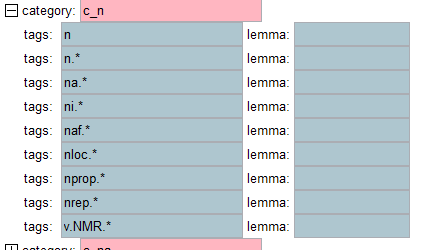
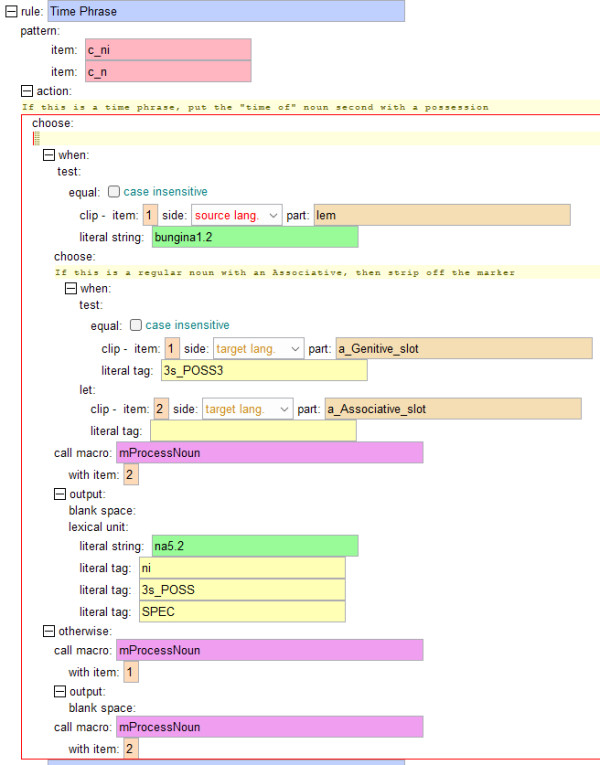
In Mato, a time phrase can occur in two slightly different ways. The word "time" comes first. With a proper noun, it's simply the noun. But any other noun must have an associative suffix on it. In the target language Uma, this phrase always has the noun first with a possessive suffix on the word for time na. Mato:
I had a rule working for the proper noun in which I specified the pattern as c_ni, c_nprop. I wanted to capture the other type of time phrase, so I just made the pattern c_ni, c_n. But while it works for the second type (ni), it doesn't fire for the proper noun (nprop) time phrase. What's wrong?
English से मशीन-अनुवादित