Dans la langue Mato, une expression temporelle peut se présenter de deux manières légèrement différentes. Le mot « temps » vient en premier. Avec un nom propre, il s'agit simplement du nom. Mais tout autre nom doit porter un suffixe associatif. Dans la langue cible Uma, cette expression place toujours le nom en premier, avec un suffixe possessif sur le mot désignant le temps na. En Mato :
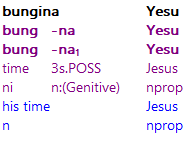
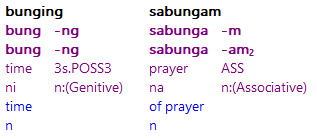
J'avais une règle fonctionnant pour le nom propre, dans laquelle j'avais spécifié le motif c_ni, c_nprop. Je voulais capturer l'autre type d'expression temporelle, j'ai donc simplement défini le motif c_ni, c_n. Mais bien qu'elle fonctionne pour le deuxième type (ni), elle ne se déclenche pas pour l'expression temporelle du nom propre (nprop). Qu'est-ce qui ne va pas ?
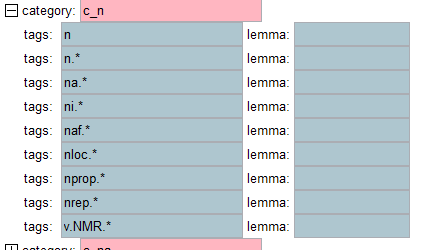
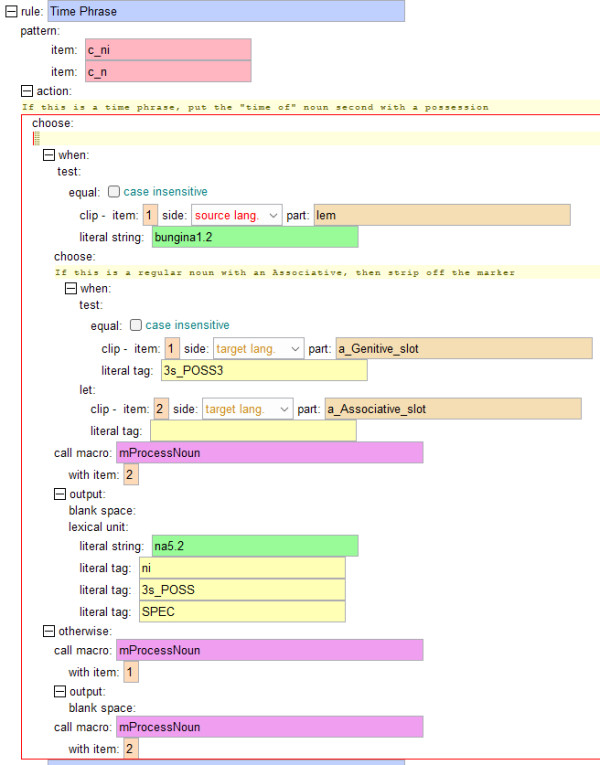
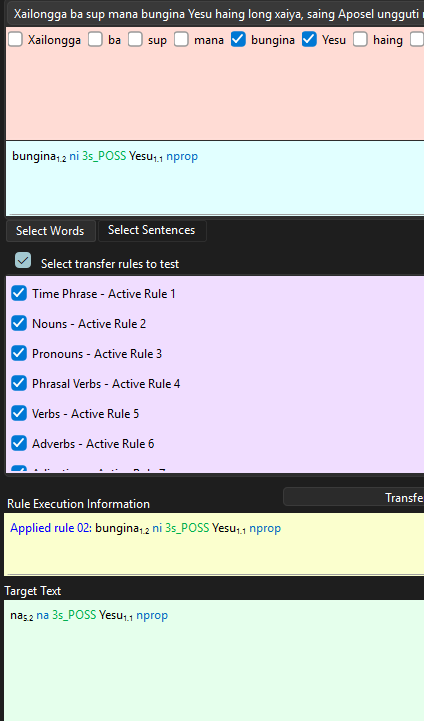
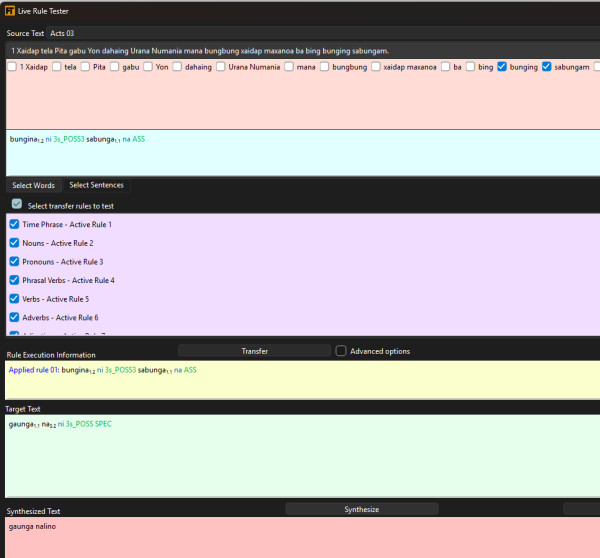
In Mato, a time phrase can occur in two slightly different ways. The word "time" comes first. With a proper noun, it's simply the noun. But any other noun must have an associative suffix on it. In the target language Uma, this phrase always has the noun first with a possessive suffix on the word for time na. Mato:
I had a rule working for the proper noun in which I specified the pattern as c_ni, c_nprop. I wanted to capture the other type of time phrase, so I just made the pattern c_ni, c_n. But while it works for the second type (ni), it doesn't fire for the proper noun (nprop) time phrase. What's wrong?
Traduit automatiquement depuis English