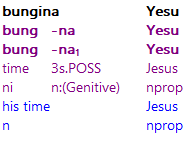
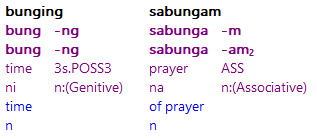
En Mato, una frase de tiempo puede ocurrir de dos maneras ligeramente diferentes. La palabra "tiempo" va primero. Con un sustantivo propio, es simplemente el sustantivo. Pero cualquier otro sustantivo debe tener un sufijo asociativo. En la lengua de destino, Uma, esta frase siempre tiene el sustantivo primero con un sufijo posesivo en la palabra para tiempo na. Mato:
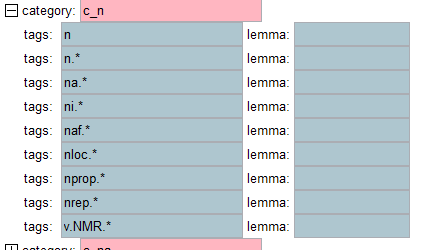
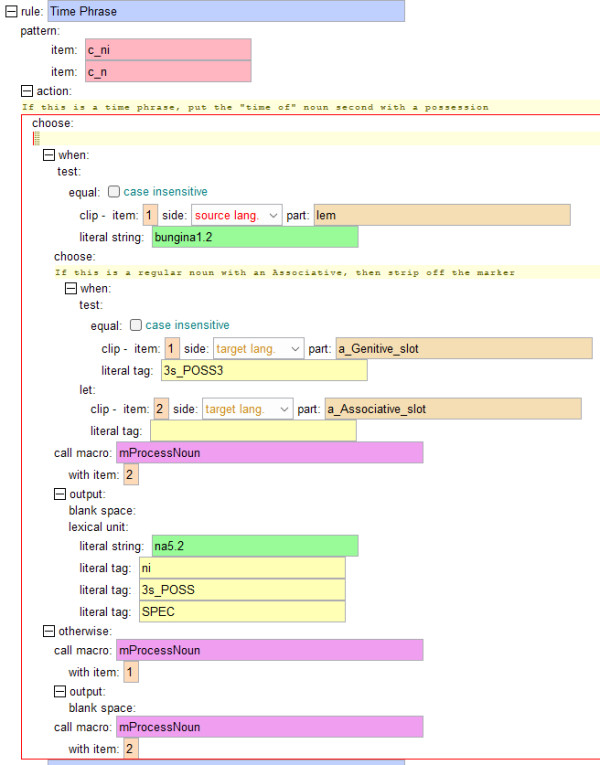
Tenía una regla funcionando para el sustantivo propio en la que especificaba el patrón como c_ni, c_nprop. Quería capturar el otro tipo de frase de tiempo, así que simplemente hice el patrón c_ni, c_n. Pero mientras funciona para el segundo tipo (ni), no se activa para la frase de tiempo del sustantivo propio (nprop). ¿Qué está mal?
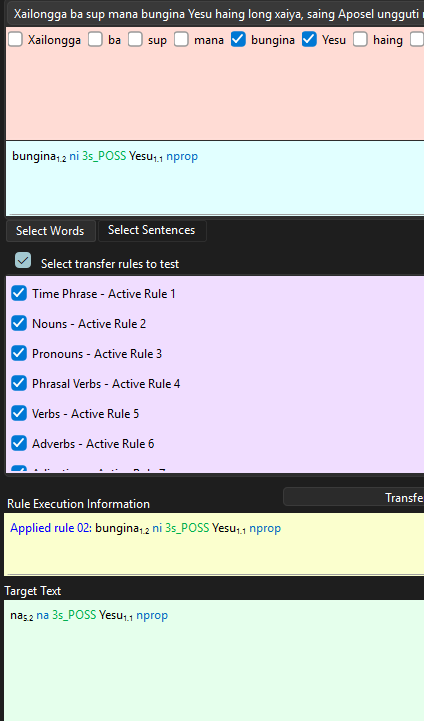
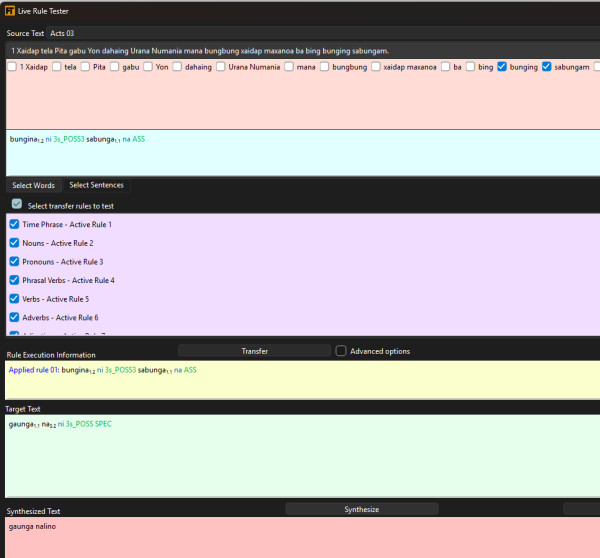
In Mato, a time phrase can occur in two slightly different ways. The word "time" comes first. With a proper noun, it's simply the noun. But any other noun must have an associative suffix on it. In the target language Uma, this phrase always has the noun first with a possessive suffix on the word for time na. Mato:
I had a rule working for the proper noun in which I specified the pattern as c_ni, c_nprop. I wanted to capture the other type of time phrase, so I just made the pattern c_ni, c_n. But while it works for the second type (ni), it doesn't fire for the proper noun (nprop) time phrase. What's wrong?
Traducción automática desde English