在 Mato 语中,时间短语可以以两种略有不同的方式出现。“时间”一词位于句首。如果是专有名词,则直接使用名词。但其他任何名词都必须带有关联后缀。在目标语言 Uma 语中,该短语总是名词在前,且“时间”一词 na 带有所有格后缀。Mato 语示例:
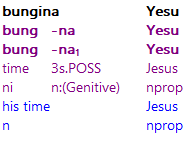
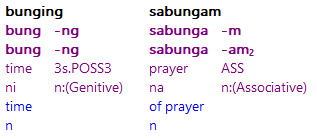
我有一条针对专有名词的规则可以正常工作,其中我将模式指定为 c_ni, c_nprop。我想捕获另一种时间短语,因此我将模式改为 c_ni, c_n。虽然它对第二种类型(ni)有效,但对于专有名词(nprop)时间短语却未触发。这是怎么回事?
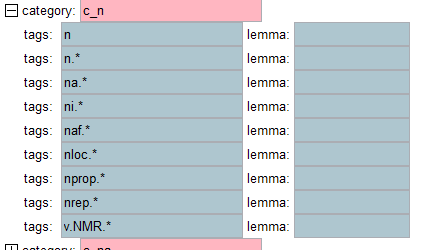
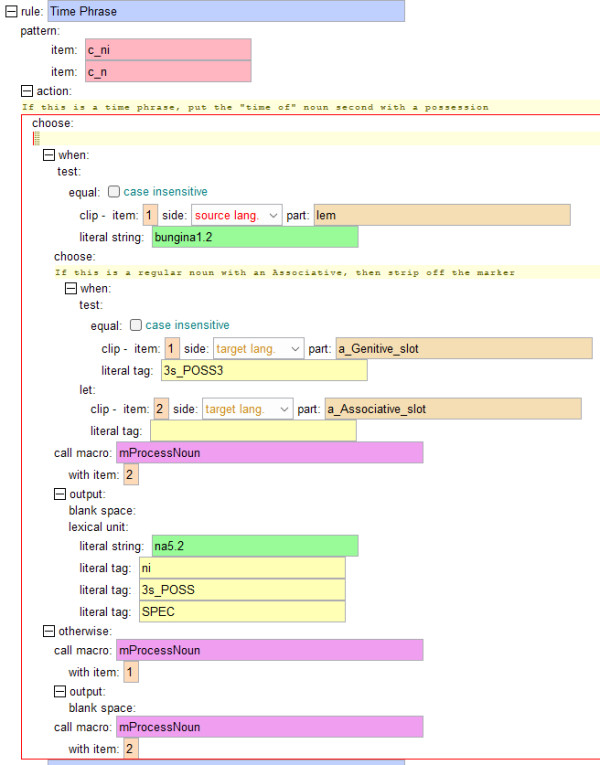
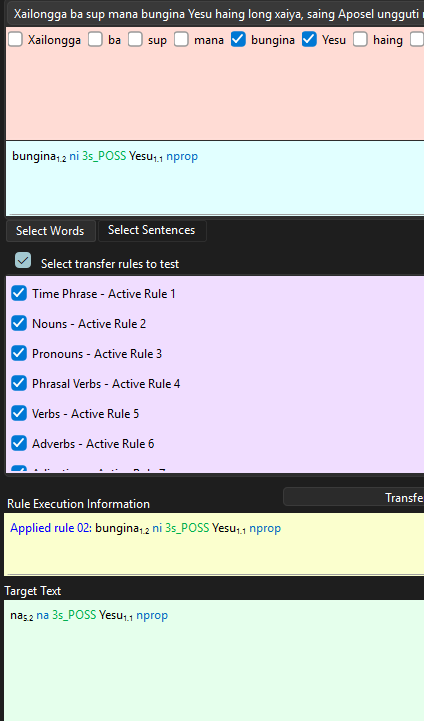
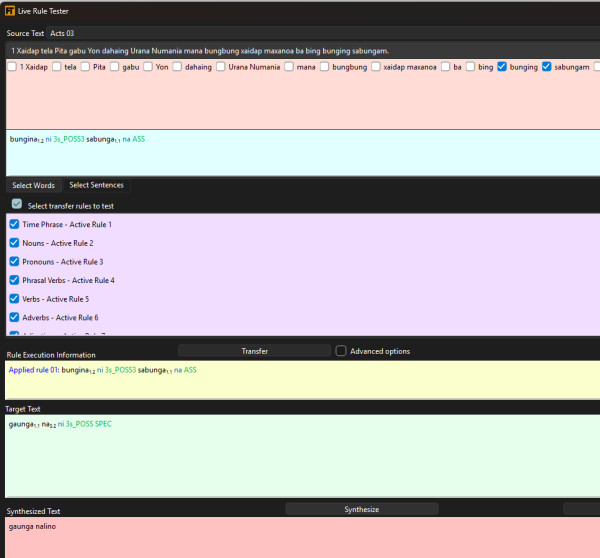
In Mato, a time phrase can occur in two slightly different ways. The word "time" comes first. With a proper noun, it's simply the noun. But any other noun must have an associative suffix on it. In the target language Uma, this phrase always has the noun first with a possessive suffix on the word for time na. Mato:
I had a rule working for the proper noun in which I specified the pattern as c_ni, c_nprop. I wanted to capture the other type of time phrase, so I just made the pattern c_ni, c_n. But while it works for the second type (ni), it doesn't fire for the proper noun (nprop) time phrase. What's wrong?
机器翻译自 English